
How to Read Tarot Cards
A complete guide to understanding tarot: the deck, the spreads, the meanings, and how to turn a few cards into real insight.
What Is Tarot?
Tarot is a deck of 78 symbolic cards used for reflection, guidance, and self-awareness. It is not fortune-telling. Each card carries images, numbers, colors, and archetypes that speak to the patterns of human experience. When a reader lays the cards in a spread, the result is a mirror: it reflects the energies, possibilities, and tensions surrounding the question.
The real power of tarot is that it makes the invisible visible. It turns vague worry into a story, a difficult choice into a clearer picture, and a quiet intuition into a card you can look at and discuss. The value is in the conversation it starts, not in a fixed prediction it delivers.
What Tarot Reveals
Tarot reveals the currents beneath the surface of a situation. It shows:
- Patterns that are repeating, including the ones you may not be ready to see.
- Possibilities that are open, not a single locked-in outcome.
- Questions you need to ask yourself before deciding.
- Inner dynamics - your hopes, fears, and the parts of you that want different things.
A good reading does not remove your agency. It sharpens it.
Major vs Minor Arcana
The tarot deck is divided into two parts. The Major Arcana has 22 cards representing major life themes, spiritual lessons, and turning points: birth, death, transformation, love, justice, and enlightenment. They appear when the question touches something essential.
The Minor Arcana has 56 cards split into four suits. These cards describe the details of everyday life: conversations, work, emotions, conflicts, and small decisions. They give the Major Arcana something concrete to act upon.
How to Read Tarot Cards
Reading tarot is a skill that blends knowledge, intuition, and honest attention. You do not need to be psychic. You need to understand the cards, choose a clear question, and learn to read the cards together instead of in isolation.
Set Your Question
The best tarot questions are open-ended, focused on yourself, and honest about what you can influence. Compare these:
- Less useful: "Will I get the job?"
- More useful: "What do I need to understand about this career opportunity?"
- Less useful: "Does he love me?"
- More useful: "What is the best way for me to show up in this relationship?"
The question shapes the answer. A vague question gives a vague reading.
Choose a Spread
A spread gives each card a position and a job. Here are the most common ones:
- One card: a daily focus, a yes/no orientation, or a single theme to sit with.
- Three cards: Past, Present, Future or Situation, Action, Outcome. Flexible and powerful.
- Celtic Cross: a ten-card layout for deeper situations. It covers the current state, challenge, past, future, and advice.
Start with one or three cards. Complexity does not always equal depth.
Upright vs Reversed
An upright card expresses its core meaning in a direct way. A reversed card does not mean the opposite, and it is not automatically bad. It usually points to one of these:
- Blocked energy: the quality of the card is delayed, resisted, or externalized.
- Internalized energy: the theme is happening inside the person rather than outside.
- Shadow side: the less mature expression of the archetype.
- Invitation: the card asks you to notice what you are avoiding.
Trust the whole spread. A reversed card next to an upright card changes both.
Synthesize the Cards
The final step is to read the cards as a single story. Each card has its own meaning, but the reading lives in the relationships between them. Notice:
- Repetition: are the same numbers, elements, or symbols appearing?
- Flow: does the energy move from dark to light, or from confusion to clarity?
- Contrast: where do the cards disagree or create tension?
- Advice: what does the last card or the overall direction suggest you do?
The meaning is not in any single card. It is in the conversation they create together.
The Tarot Deck
A complete tarot deck has 78 cards. The 56 Minor Arcana cards are organized into four suits, each tied to an element and a realm of life. The 22 Major Arcana cards trace the soul's journey from the innocence of The Fool to the completion of The World.
The Four Suits
Each suit is connected to an element and a way of experiencing life. The court cards (Page, Knight, Queen, King) show different expressions of that suit energy, while the numbered cards describe situations and stages.
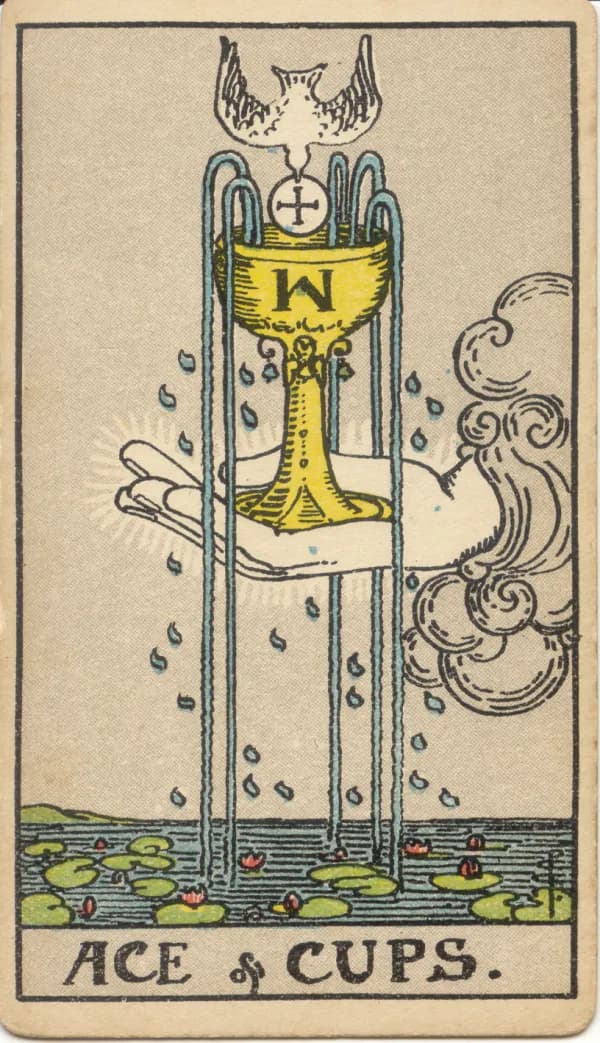
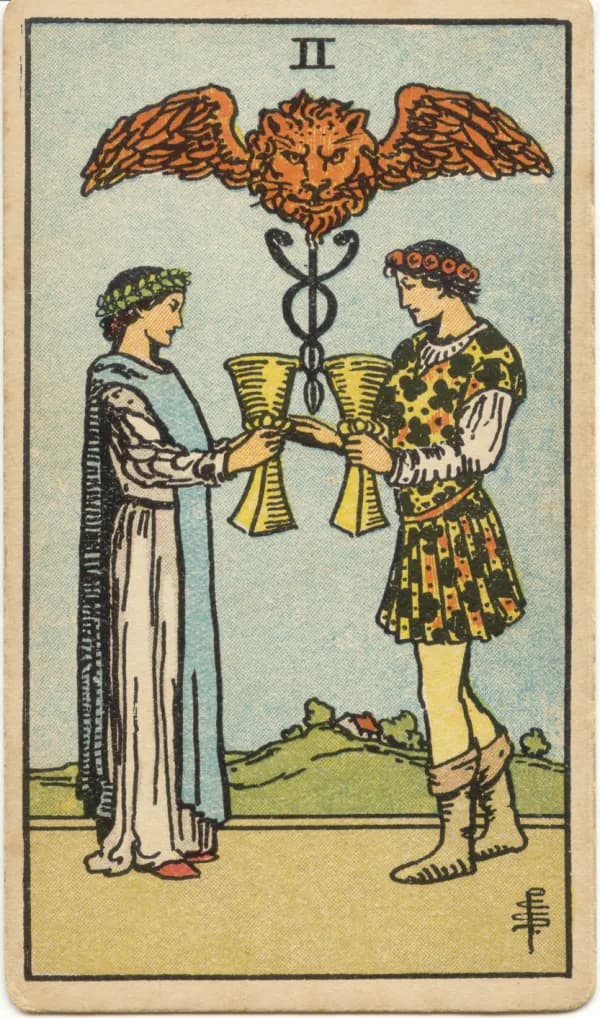
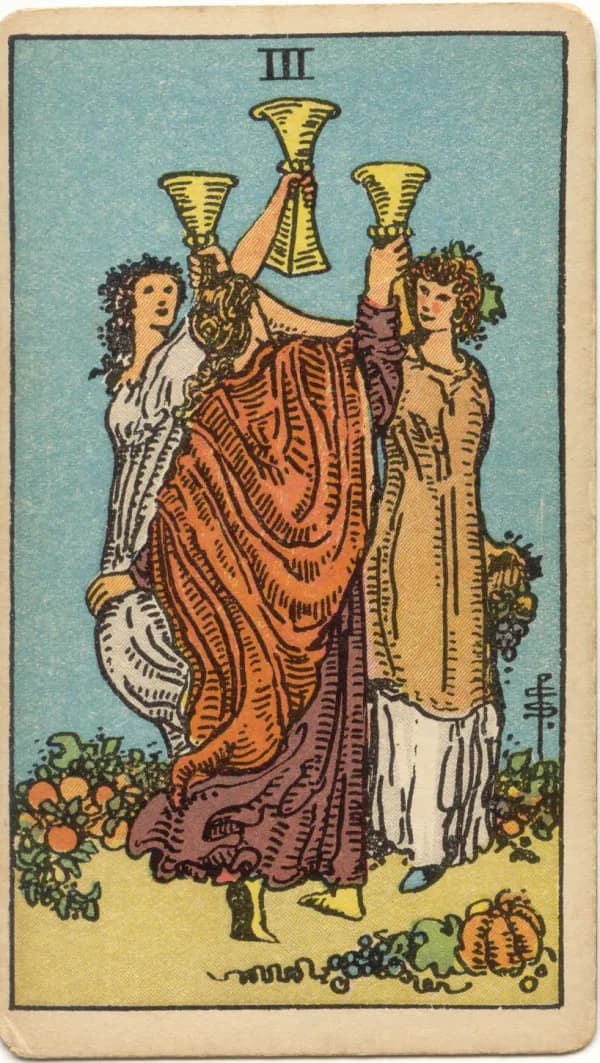
Suit of Cups
Emotions, relationships, intuition, and creativity
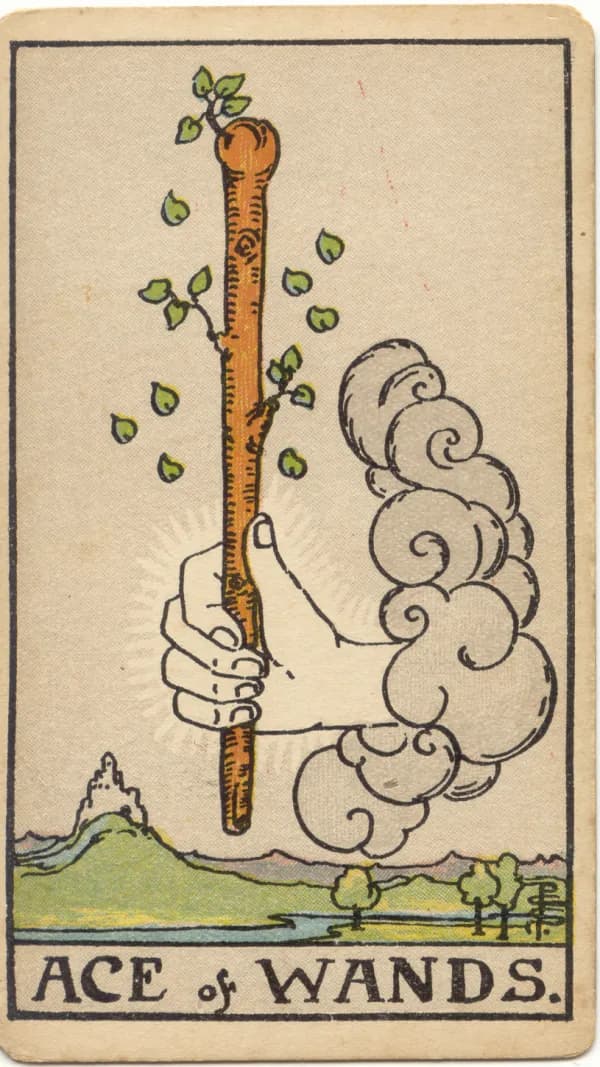
Suit of Wands
Passion, inspiration, action, and ambition
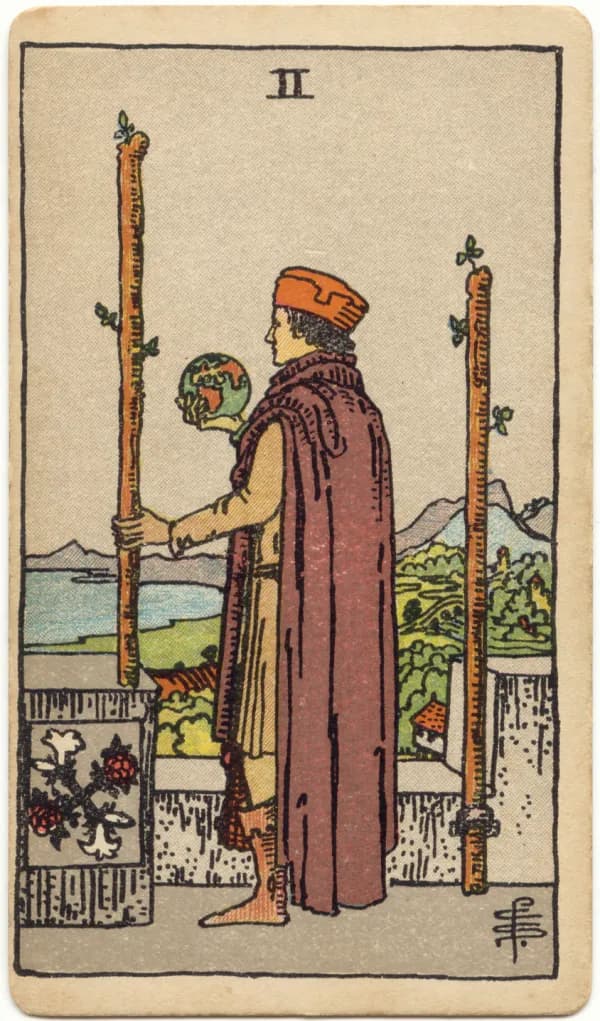
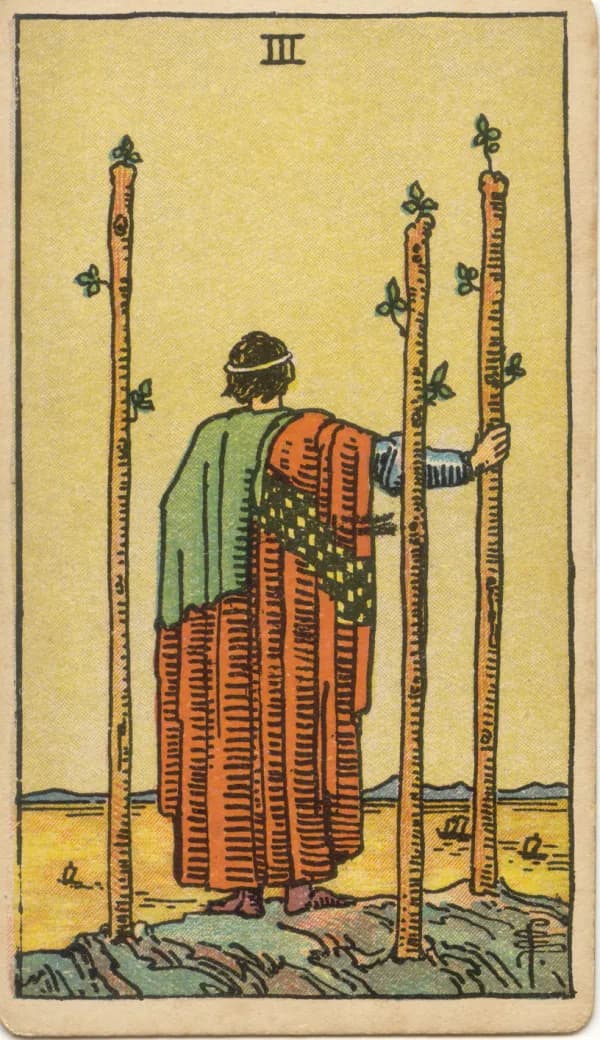
Suit of Swords
Thought, clarity, conflict, and communication
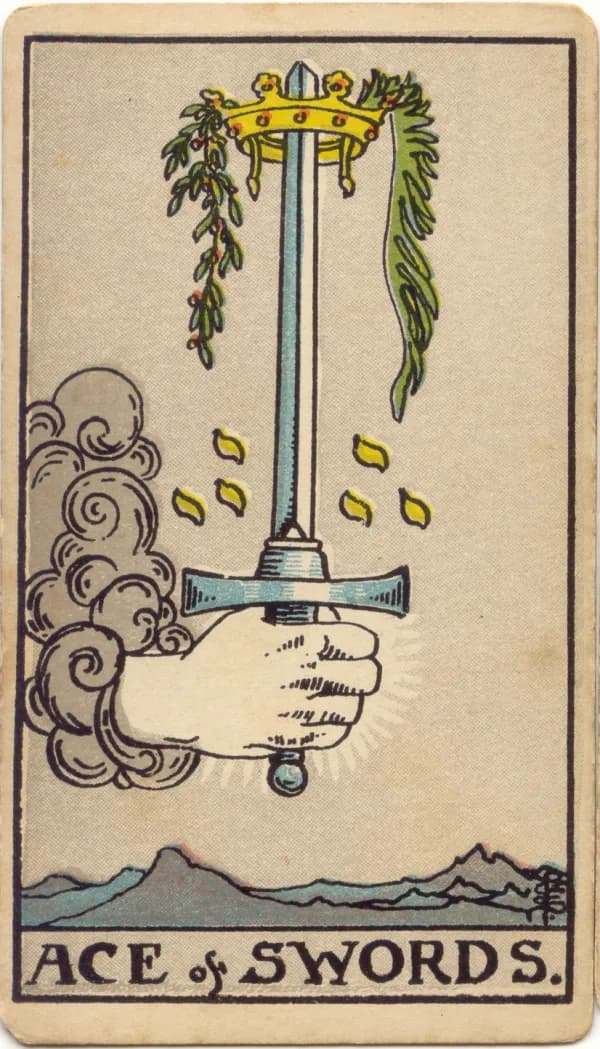
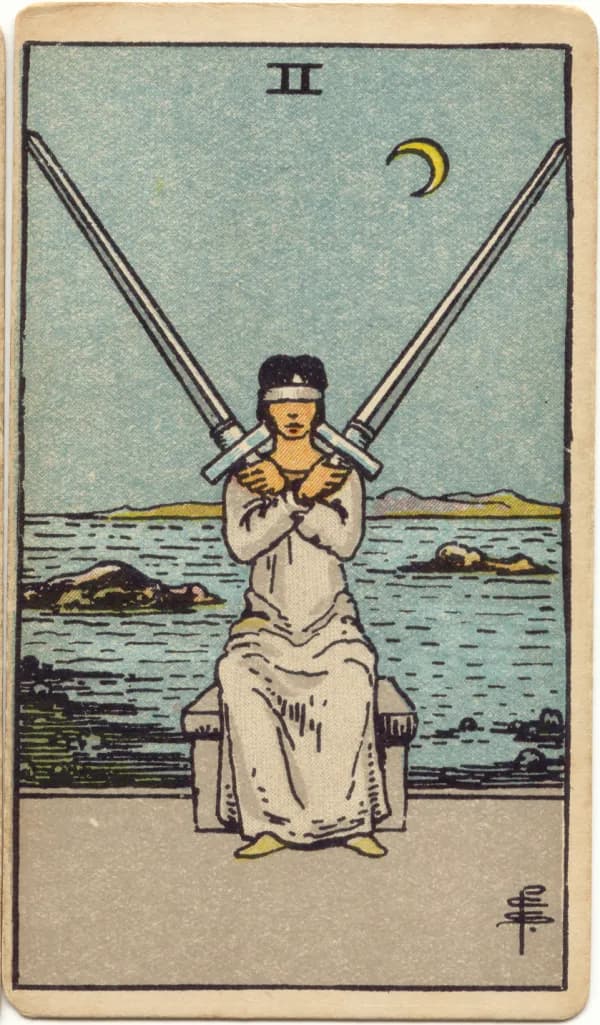
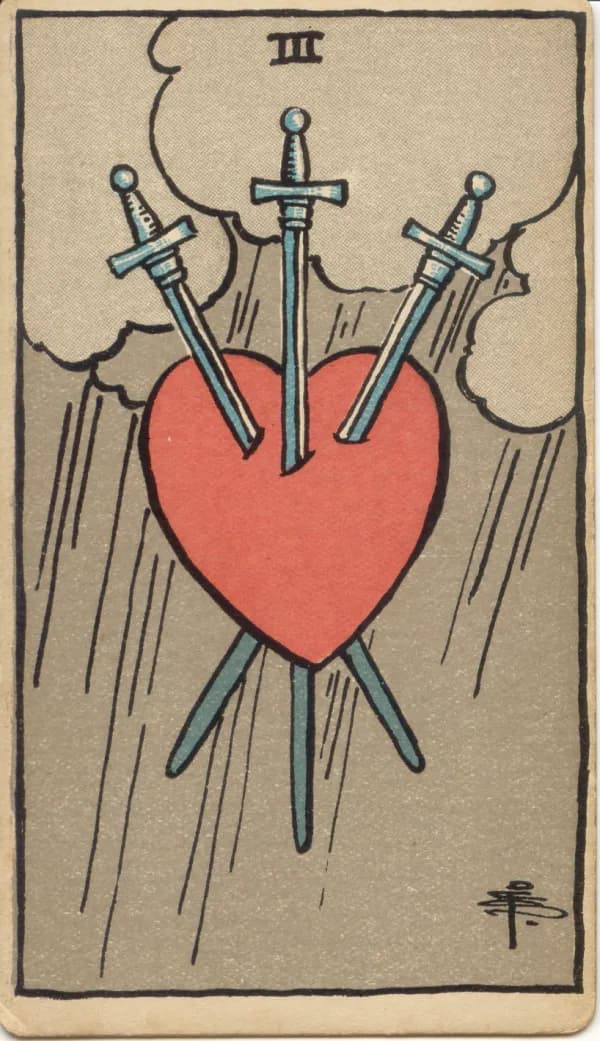
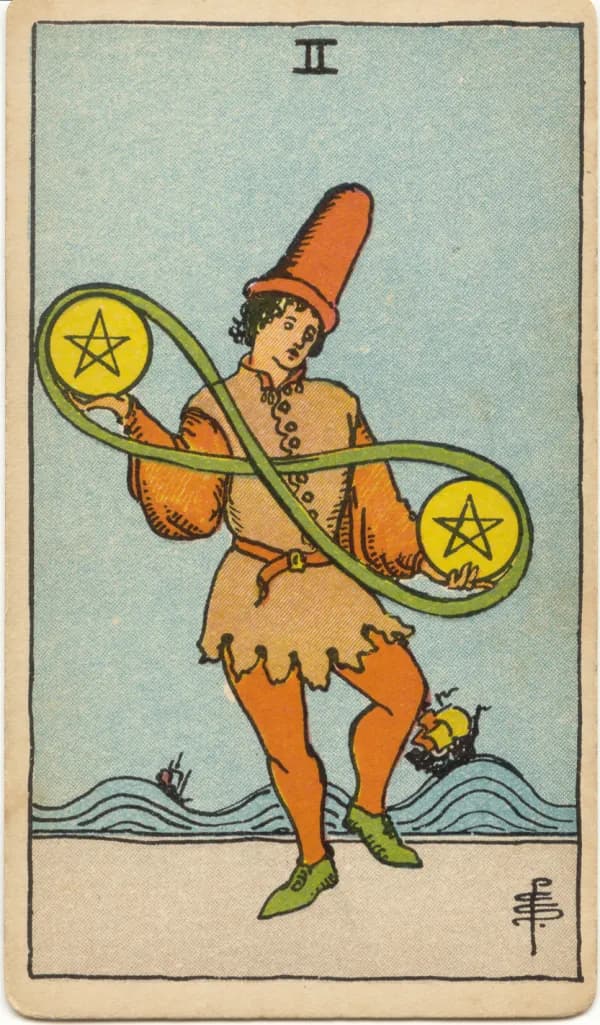
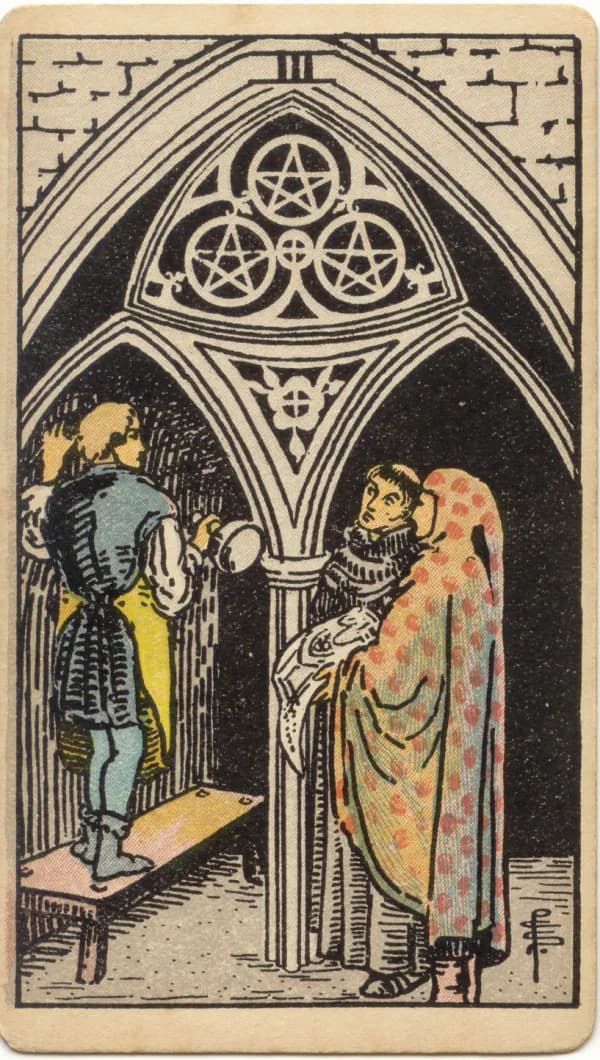
Suit of Pentacles
Money, work, and the material world
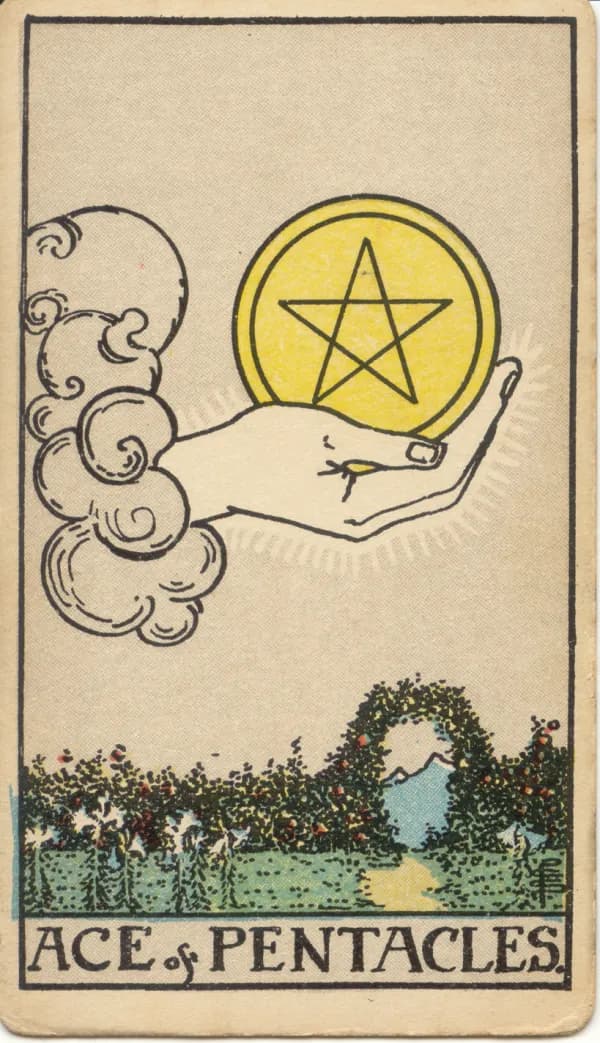
Numbers & Court Cards
Within each suit, the numbered cards Ace through Ten trace one arc of development, and that arc repeats across all four suits. Learn it once and you can read forty cards:
- Ace: the pure seed of the suit - a new offer of its energy.
- Two & Three: choice, balance, and first growth - the seed takes form.
- Four & Five: stability, then disruption - what was built gets tested.
- Six & Seven: recovery and reassessment - harmony returns, but demands a decision.
- Eight & Nine: mastery and intensity - the suit's energy near full strength, for better or worse.
- Ten: completion - the end of the cycle, carrying the seed of the next.
The court cards (Page, Knight, Queen, King) are the suit's energy embodied as a maturity ladder. They can represent people in your life, roles you are playing, or stages of your own development:
- Page: the student - curious, inexperienced, open; often a message or a beginning.
- Knight: the pursuer - the suit's energy in motion, passionate and sometimes extreme.
- Queen: the embodiment - the suit's energy matured inward, nurturing and deeply understood.
- King: the director - the suit's energy matured outward, commanding and responsible for it.
When a court card appears, ask first: is this someone around me, or a version of me the situation is calling for?
Major Arcana Cards
The Major Arcana are the big archetypes of the tarot. They do not deal with the ordinary details of life; they address transformation, identity, purpose, and the unfolding of a larger story. Here are the first cards of the journey.
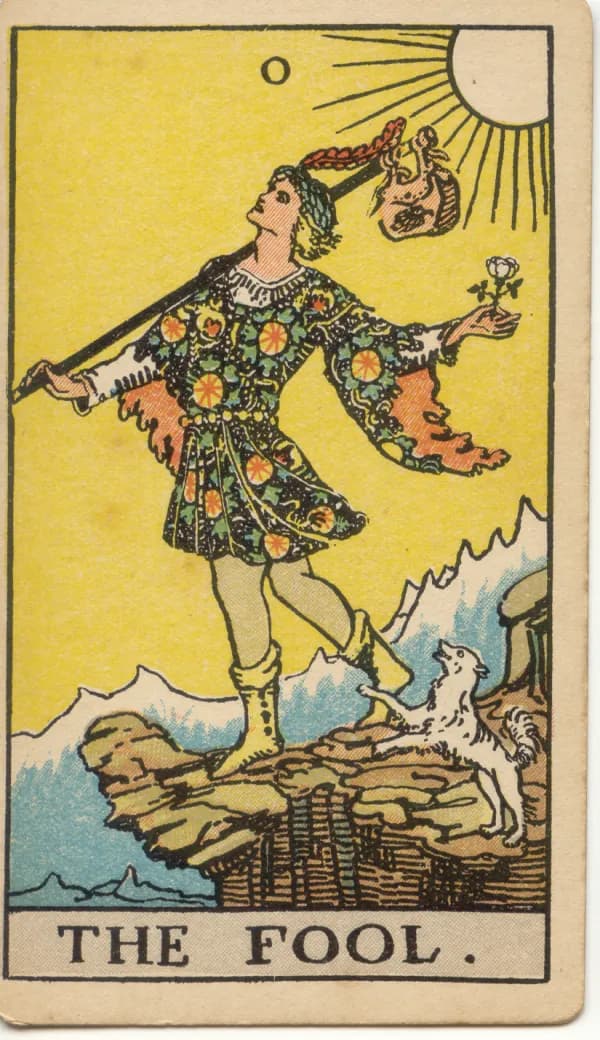
The Fool
Beginnings, Innocence, Spontaneity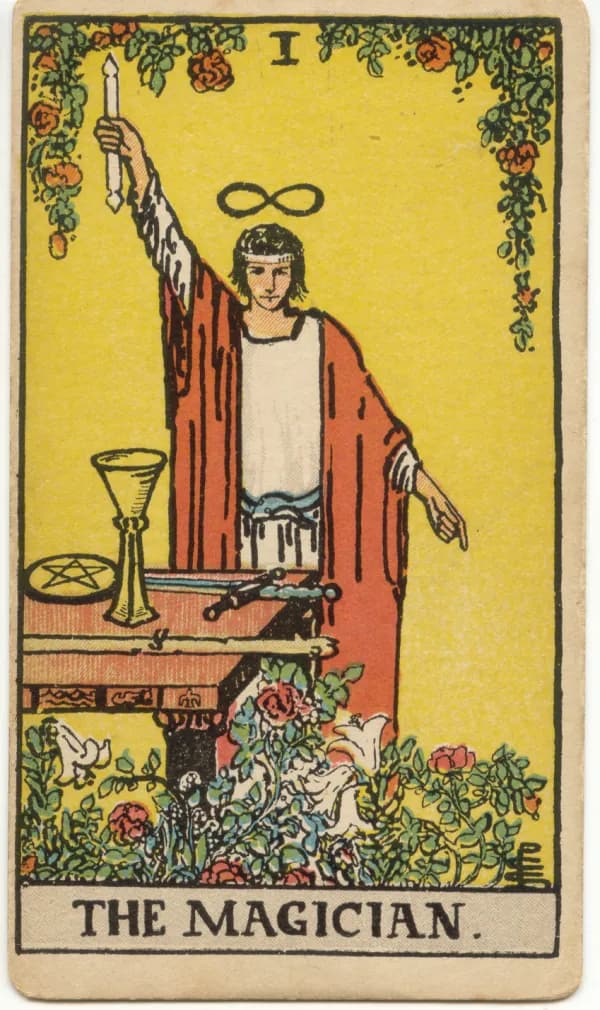
The Magician
Manifestation, Power, Action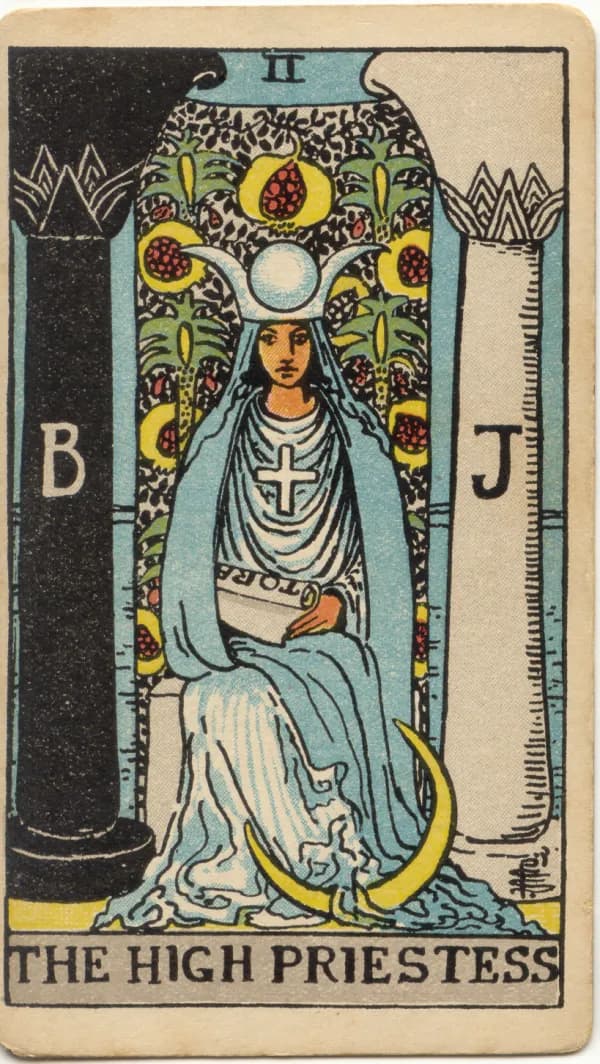
The High Priestess
Intuition, Sacred Knowledge, Mystery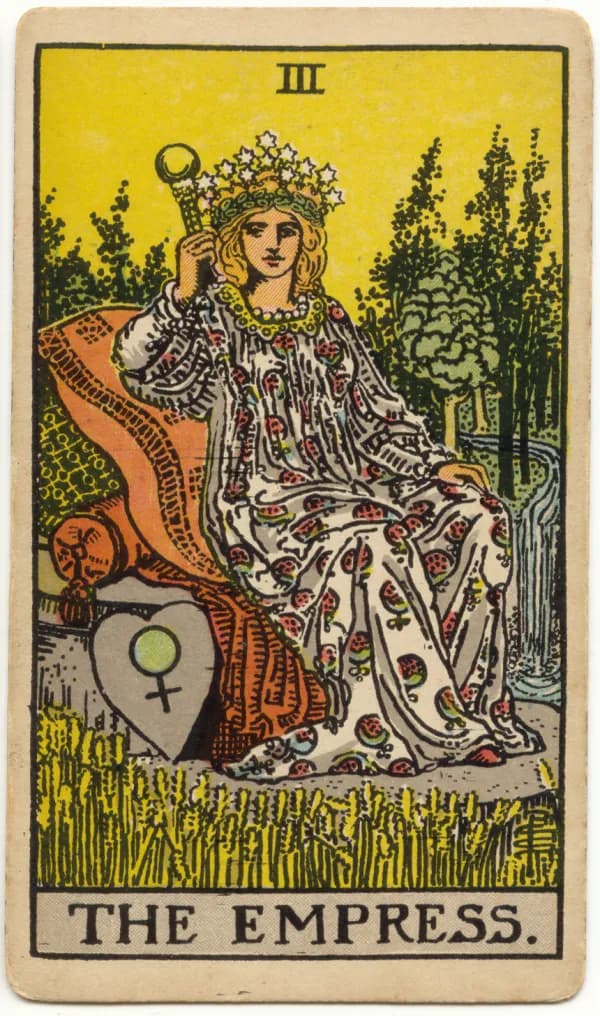
The Empress
Abundance, Nurturing, Fertility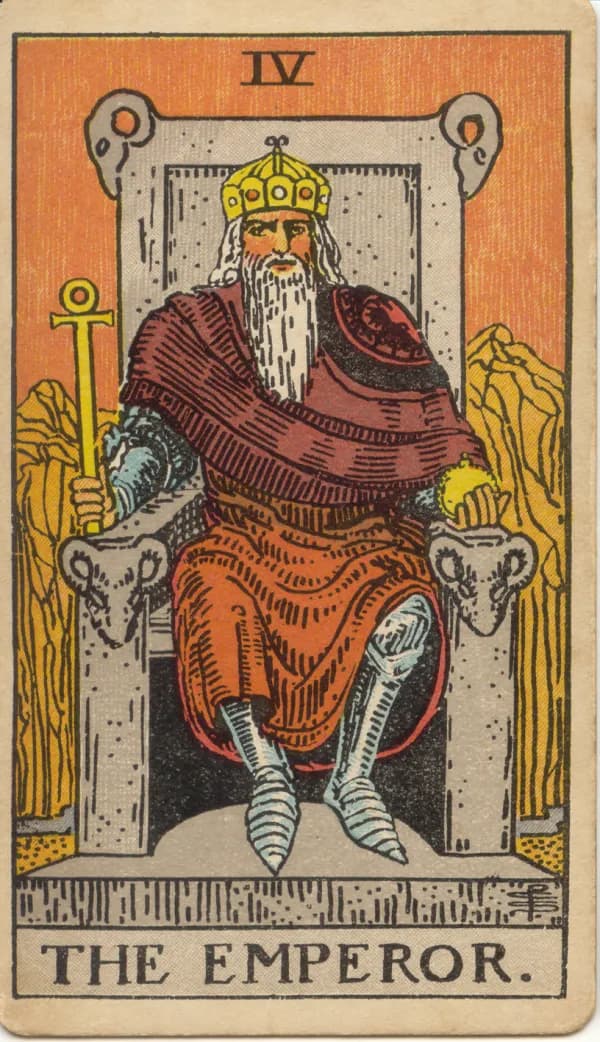
The Emperor
Authority, Structure, Control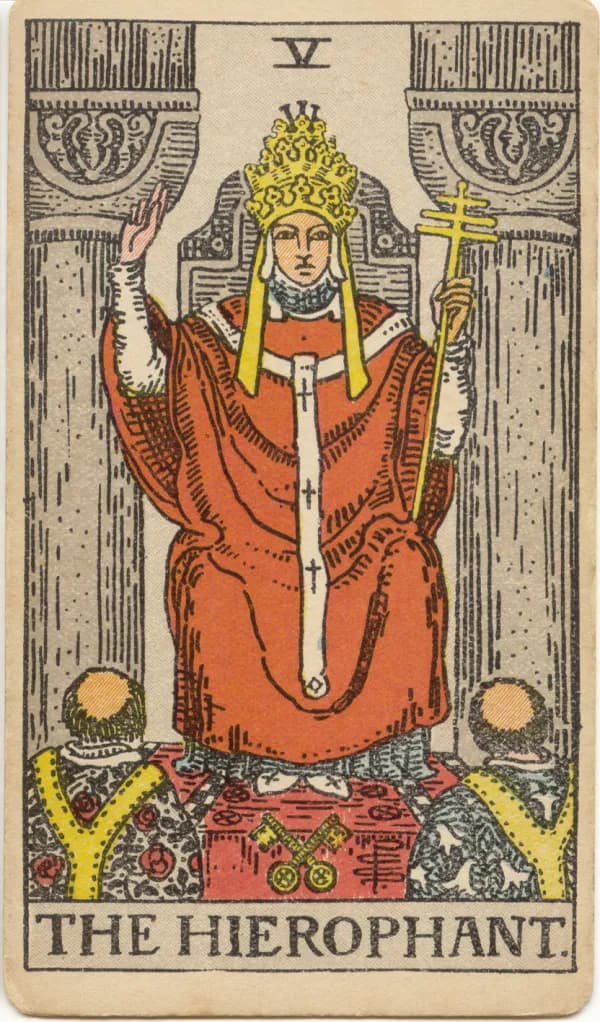
The Hierophant
Tradition, Conformity, EducationFeatured Card: The Fool
The Fool is depicted as a young man standing on the edge of a cliff, about to step off. He carries a small sack containing all his worldly possessions. A small white dog accompanies him, representing loyalty and protection. The sun shining behind him represents the divine knowledge that guides him.
“Leap, but look first.”
Sample Three-Card Reading
This is an example of a three-card Past, Present, Future spread. It shows how three cards tell a single story and how the meaning of each card is shaped by its position.
"What is moving in this situation right now?"
The Fool
The upright Fool signifies calculated risk and the opportunity to begin anew and follow your heart's desire. The journey ahead is not without danger, but it is time to take a leap of faith. This card augers well for those embarking on new enterprises and educational courses, provided sensible planning is in place; this is a time for optimism and a fresh perspective. The Fool brings an opportunity to start over and feel young again or excited at the prospect of a new way of living; the Fool is an embodiment of your spirit, ready to explore and discover. Whatever you start now will go well, provided you do look before you leap-but once the decision is made, it's time to push forward and not look back; have courage, commit to your path, and be fully in the moment.
The Magician
It's time for action-for communicating and expressing your ideas and desires. This is the card of the inventor, the traveler, the self-employed, and the entrepreneur, as it beckons you to broaden your horizons. You will have the drive to spur your plans forward, and, perhaps, to take new, creative approaches: to think laterally, ask questions, trust your internal guidance, and let go of procrastination. Blessed with a magic wand, you have the ability to transform whatever you choose, and in this way, the Magician is a very positive card in a reading. He directs you to make the most of your skills and talents and step into your power; focus on your projects and capitalize on your personal strengths. Spiritually, the Magician shows you connecting with your higher, or true, self and acting with pure intention.
The High Priestess
Hidden knowledge, intuition, psychic experience, and significant dreams are the gifts of the High Priestess. This is a time for incubation and privacy, to go inward, deepening your relationship with your higher self and trusting your internal knowing. In your everyday life, confidentiality is key. If you have a secret, or a project you are nurturing, it is better to keep your own counsel. On your spiritual path, the High Priestess predicts learning and a mentor. As the card of psychic gifts, her arrival in your reading can be a sign to follow your intuition and connect with your guides.
This reading moves from the open beginning of The Fool into the focused agency of The Magician, then deepens into the hidden wisdom of The High Priestess. It is a story of starting a journey, discovering the tools to shape it, and learning to trust the knowledge that lives below the surface. The cards suggest that right now you are both the seeker and the source of the answer.
Take the leap, but prepare your intention. Use your skills, speak clearly, and trust your intuition even when the path is not fully visible. The next step is already inside you.
Frequently Asked Questions
Common questions about reading tarot and interpreting the cards.
Tarot is a deck of 78 symbolic cards used for reflection, self-awareness, and guidance. It reveals the patterns, possibilities, and inner dynamics shaping your question. Rather than predicting a fixed future, tarot mirrors the energies at play so you can make choices with clearer eyes.
Tarot is not about predicting a locked-in future. It is a reflective tool that explores probable directions, hidden influences, and the story you are telling about your situation. The cards highlight what is already moving beneath the surface and invite you to respond with intention.
No. Anyone can learn tarot. The meanings are built into a structured system of archetypes, symbols, and correspondences. Intuition develops over time through practice, but the foundation is knowledge: learning the card meanings, the positions, and how to weave them together.
The Major Arcana consists of 22 cards representing big life themes, spiritual lessons, and turning points. The Minor Arcana has 56 cards divided into four suits and deals with daily events, thoughts, feelings, and practical matters. Together they cover both the soul-level story and the details of everyday life.
Reversed cards are not automatically negative. They can indicate blocked, delayed, internalized, or shadow expressions of the upright meaning. Sometimes a reversed card points to a lesson that needs to be learned, or a different angle of the same energy.
The best questions are open-ended and focused on yourself or your own choices. "What do I need to understand about this situation?" or "How can I move forward with clarity?" work better than "Will X happen?" or "When will Y occur?" because they give the reading room to offer real guidance.
A spread is the layout of positions in which cards are placed. Each position has a meaning, such as Past, Present, Future, Situation, Action, or Outcome. The spread gives structure to the reading and helps you see how the cards interact as a story.
Tarot is most useful when you have a genuine question or need perspective. You can use it daily for a single-card focus, weekly for a broader check-in, or whenever you are at a crossroads. Avoid repeatedly asking the same question hoping for a different answer.
Yes, as long as you have the person's permission and approach the reading with respect. When reading for others, frame the guidance as possibilities and reflections, not directives. The person receiving the reading remains the authority on their own life.
All you need is a tarot deck and a willingness to learn. A simple notebook helps track questions, spreads, and interpretations. Start with one-card draws and a simple three-card spread, then build up to more complex layouts as you grow comfortable with the cards.